


.png?h=500&iar=0&w=1900)
What is OMS?
The organisation, the data protocol & OMS LPWAN explained
If you work with smart metering, you may have come across the term OMS. If not, let’s quickly get you up to speed on this. The problem is that OMS is often used to describe three different things, which creates a bit of confusion – especially when utilities are evaluating future meter communication, interoperability, and long-term infrastructure choices.
OMS can refer to:
- The industry organisation (OMS Group)
- The open metering specification and data protocol
- OMS LPWAN technologies within Generation 5 (including Burst Mode and Splitting Mode)
Understanding this distinction is important, because utilities are not just choosing meters – they are choosing a long-term communication and data foundation.
1. The OMS industry organisation
Firstly, OMS refers to the OMS Group — an industry organisation comprising 70+ meter manufacturers, utilities, and communication stakeholders. Its role is to define and maintain an open and vendor-independent framework for metering communication.
For utilities, this matters because it creates a shared ecosystem rather than a single-vendor solution. It supports interoperability, certification, and long-term evolution of communication standards.
What does LPWAN mean? |
| LPWAN stands for Low-Power Wide-Area Network. At a high level, LPWAN enables battery-powered devices to send small amounts of data over long distances with low energy consumption. Typical LPWAN technologies include LoRaWAN, NB-IoT, LTE-M, Sigfox, and OMS LPWAN. |
2. The OMS data protocol & specification
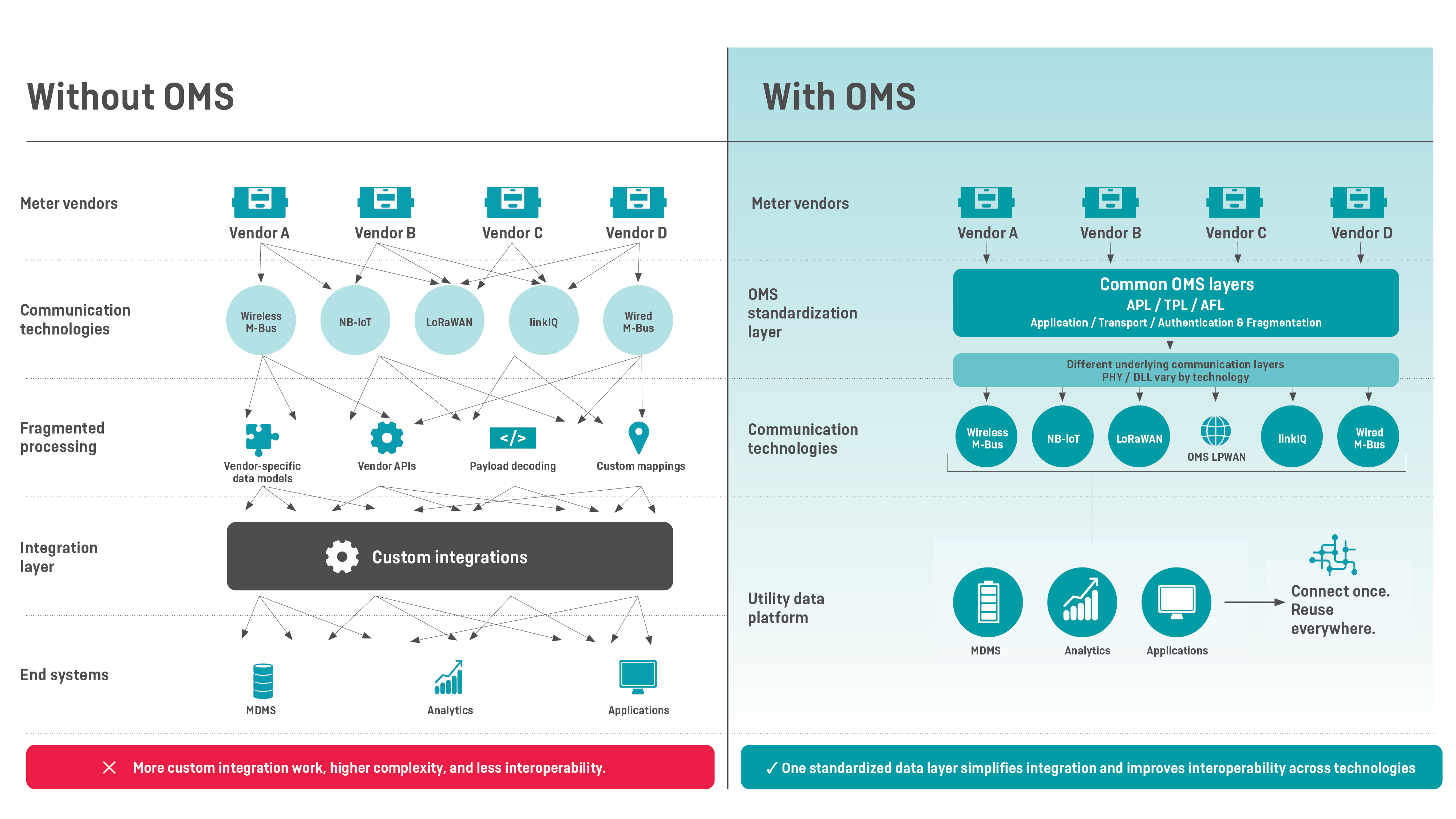
OMS also refers to the communication specification itself. Built on the M-Bus and Wireless M-Bus standards, it defines how devices communicate and how data is structured. This is what utilities typically refer to as “OMS data” — a standardised, interoperable data layer that allows meters and systems from different vendors to work together.
The key benefit is flexibility:
- Easier integration across systems
- Reduced vendor lock-in
- Better support for mixed meter fleets
- Improved future-proofing
A common challenge we see at utilities is that meter data differs across meter vendors, meter types, and communication. Even when mixing communication solutions such as wM-Bus and NB-IoT from the same meter vendor and same meter type can mean you may not be able to get the same data across the two.
Using the OMS data protocol, your data is at least always in the same format.
3. OMS LPWAN (Generation 5)
OMS also includes a long-range communication layer known as OMS LPWAN, introduced as part of Generation 5.
This means that OMS now supports use cases that require:
- Radio-based long-range communication
- Two-way communication
- Frequent data collection
- Advanced functionality such as remote updates and commands
- Low to no impact if telcos phase out their gateway or concentrator modem technology
In OMS LPWAN, two transmission modes are defined:
- Burst Mode
- Splitting Mode
Burst Mode vs. Splitting Mode
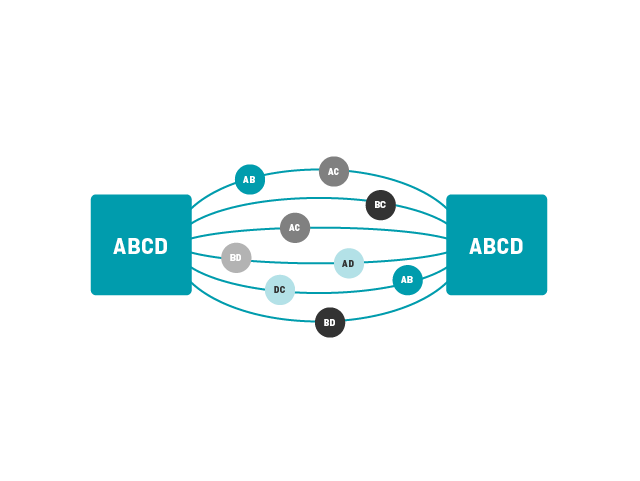
Both Burst Mode and Splitting Mode are designed to support LPWAN communication under OMS, with different strengths and weaknesses depending on the use case. The key difference lies in how data is transmitted.
| Burst Mode (OMS-B) | Splitting Mode (OMS-S) |
| Transmits data in one complete message (a single burst) | Divides messages into multiple fragments |
| Simpler implementation – especially for two-way communication | Theoretically longer range than Burst-Mode |
| Lower complexity in system design | Can be beneficial in constrained transmission environments |
| Well suited for scalable and cost-efficient deployments | Adds complexity in both device and network handling |
| Requires paid license from Diehl and Frauenhofer Institute | |
 |  |
From a practical utility perspective, the choice between the two depends on the specific requirements for reliability, complexity, and scalability.
Why Burst or Splitting Mode matters to utilities
The confusion around OMS often leads to unclear conversations and decisions. Utilities may think they are choosing one thing, when in reality they are making multiple independent choices.
These include:
- Whether to adopt the OMS ecosystem
- Whether to use the OMS data model
- Whether to deploy OMS LPWAN as a communication technology
Separating these decisions allows for better alignment between business goals, technology choices, and long-term strategy.
OMS LPWAN Burst-Mode: The best product-market fit with several networks already installed
For vendors like Kamstrup, it’s no secret that developing and adopting new communication technologies requires huge investment and involves many decisions and trade-offs. When we speak with our customers about their wishes and demands for future communication solutions, we typically hear:
- Open solutions that provide supplier independence
- Lower total cost of ownership
- Higher security to meet compliance requirements and consumer demands
- Two-way communication for meter updates and remote installation interaction
- More data delivered frequently, including on battery-powered meters
At Kamstrup, we have conducted a thorough analysis of LoRaWAN, linkIQ, wM-Bus, NB-IoT, OMS LPWAN Splitting Mode, and OMS-LPWAN Burst Mode.
Our conclusion is clear: OMS LPWAN Burst-Mode offers the best product-market fit for our customers.
We’re extremely excited to share more details soon and bring our first solution to market in Q4 2026. We have already completed multiple successful projects in the UK using this technology, delivering remote valve opening and closing functionality as well as 100% data reading performance.
Highlights
Customer case story
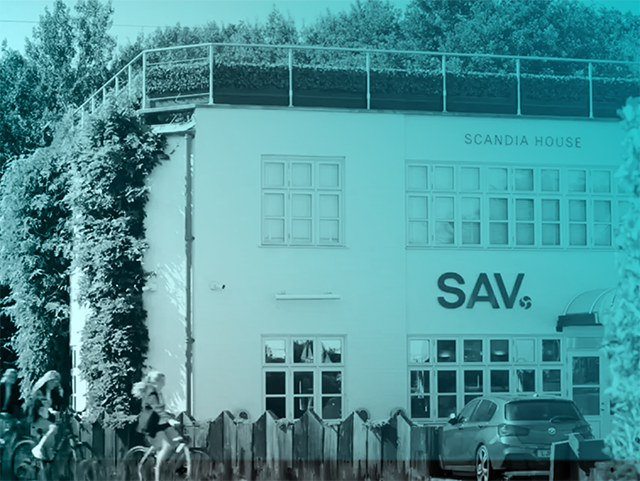
Together with our partner company, SAV, we launched a solution, on OMS LPWAN technology, that enables the heat utility of London to control heat access remotely.
Read more about OMS. Read our case study: SAV installs world’s first 2-way OMS LPWAN Burst Mode heat metering network.