







The City of Clemson, South Carolina, was already one-third of the way through an advanced metering infrastructure (AMI) deployment when persistent problems with its existing meters prompted utility leadership to reconsider its investment.
Delayed inventory, premature meter failures, and questionable readings were creating additional work for utility crews and undermining confidence in the technology. With approximately 3,000 meters already installed, the city faced a consequential decision: continue with the existing system or change course before committing to it for the next two decades.
Clemson chose to make the switch.
Working with Kamstrup and installation partner Concord Utility Services, the city deployed a new ultrasonic metering and AMI solution in just four months. Today, the utility has access to hourly consumption data, improved visibility into customer usage, and a network of meters equipped with built-in acoustic leak detection.
The early results are already changing how Clemson manages its water system.

Clemson AMI Project at a Glance
9,288
Residential meters
4 months

Deployment timeline
5 Leaks

Identified and repaired before surfacing
Hourly

Water consumption data
Solution: Kamstrup ultrasonic meters, advanced metering infrastructure, and built-in acoustic leak detection.
The Challenge: An AMI Investment Clemson Could No Longer Stand Behind
Clemson's water utility serves a community shaped by its university. Student housing, rental properties, residential neighborhoods, and growing commercial and mixed-use developments create a diverse metering environment. Utility operations must also accommodate the university calendar and frequent tenant turnover.
The city purchases treated water from Anderson Regional Joint Water System and distributes it to its customers. Accurate measurement is essential not only for billing, but also for accounting for the water the utility purchases and delivers.
Clemson had already begun transitioning from manual meter reading to AMI with another manufacturer. Approximately 3,000 meters were installed when the utility began experiencing significant problems.
Inventory delays disrupted progress. Some newly installed meters failed within weeks, requiring crews to return and replace them. More concerning, utility staff encountered meters that continued registering consumption even after being removed from service.
For Dustin Hayes, the utility's interim director at the time of the interview, one customer interaction made the situation impossible to ignore. While investigating a billing complaint, he removed a meter from its vault and observed it continuing to register usage in front of the customer.
The problems extended beyond individual meter failures. Each replacement consumed staff time, while questionable readings made billing conversations more difficult.
With two-thirds of the deployment still ahead, Clemson had an opportunity to reconsider the long-term implications of its decision.
The utility needed a solution that would restore confidence in measurement, fit within its remaining financial resources, and meet an ambitious deployment deadline without creating additional operational complications.
The Solution: A Complete Kamstrup AMI System within Clemson's Existing Budget
When Kamstrup began discussions with Clemson in 2024, the utility had already invested in meters and communications infrastructure from its previous supplier. Any alternative would need to account for those sunk costs while providing a practical path to completing the project.
Kamstrup worked with the city and its distribution partner to develop a proposal that met Clemson's financial requirements. Rather than purchasing approximately 6,000 additional meters to complete its previous system, the city could transition to a complete Kamstrup solution covering approximately 9,600 metering points.
The proposal addressed Clemson's immediate concerns about reliability, inventory availability, and installation efficiency while introducing a capability the utility had not originally anticipated: continuous acoustic leak detection built directly into its residential meters.
Locally Manufactured Meters Helped Build Confidence
Before committing to the project, members of Clemson's team visited Kamstrup's manufacturing facility in Cumming, Georgia, approximately two hours from the utility.
The visit gave the team an opportunity to see how its meters would be manufactured and meet the people responsible for producing them.
For Hayes, seeing the facility and the manufacturing process helped establish confidence in the decision.
Heather Cartee, Clemson's utility billing manager, was similarly impressed by the confidence Kamstrup employees expressed in the product they were building.
The visit reinforced an important distinction for Clemson: the city wasn't simply selecting a different meter. It was establishing a working relationship with a manufacturer that would support the utility through deployment and beyond.
Integrated Ultrasonic Meters Simplified Installation
The Kamstrup flowIQ® 2200 ultrasonic water meter provided a simpler installation process than the equipment Clemson had previously used.
With metering, communications, and acoustic leak detection integrated into the meter, crews no longer needed to connect external communication devices or perform a separate activation procedure.
Once installed and filled with water, the meter activates automatically.
This integrated design reduced the number of components and installation steps required in the field, helping the utility and its installation partner maintain an aggressive deployment schedule.
It also gave Clemson access to more than consumption data from each metering point. Every residential meter equipped with Kamstrup Acoustic Leak Detection (ALD) would contribute to a permanent network for monitoring potential leaks in the distribution system.
A Coordinated Deployment Completed in Four Months
Replacing an AMI system mid-deployment introduced considerable logistical challenges.
During the transition, Clemson needed to manage its existing AMI infrastructure, remaining manual meter reads, and the introduction of a third system for the new deployment.
Coordination between the utility, Kamstrup, and Concord Utility Services was essential.
Kamstrup delivered the project's meter inventory within weeks, while Concord managed field installation through a work-order system that gave Clemson visibility into installation progress and outstanding issues.
Regular communication allowed the three teams to address field conditions as they arose and coordinate work without losing momentum.
The result was a completed deployment in four months, establishing a new metering foundation for the city.
The Results: Better Water Data Changes How Clemson Operates
For Clemson, the value of the new system extends beyond completing its AMI deployment. The utility now has access to information that helps its teams make more informed decisions, from identifying underground leaks to investigating customer billing questions.
The benefits are evident across three distinct areas of utility operations.
1. Continuous Acoustic Leak Detection Helps Clemson Find Underground Leaks Earlier
One of the most significant early outcomes has been the ability to identify leaks in Clemson's distribution system before water reaches the surface.
Historically, Water Supervisor David Chastain and his crew relied on traditional listening equipment to locate underground leaks. Isolating the sound of escaping water could be difficult, particularly with competing underground noise.
The process also depended on crews knowing where to investigate.
With Kamstrup ALD built into the city's residential meters, Clemson now has a network of 9,288 metering points continuously monitoring acoustic conditions.
Rather than relying exclusively on periodic surveys or visible signs of water loss, the utility can use acoustic information to identify areas that warrant investigation.
Chastain was initially skeptical that a meter could detect leaks on the utility's side of the service connection. His experience in the field changed that perspective.
Early field result: 5 underground leaks
Identified and repaired before surfacing, with Chastain locating the leaks within approximately two feet of the locations indicated by the meters.
Reported by Clemson's utility team during its case study interviews.
“Back in the old days, you had to see water on the ground before you knew there was a leak. Now we're finding them before they ever surface.”
— David Chastain, Water Supervisor, City of Clemson
Earlier detection has implications for both water conservation and operational planning.
Because Clemson purchases its treated water, every distribution leak represents water the utility has paid for but cannot deliver to customers.
Identifying leaks sooner helps reduce the time water is lost underground.
The acoustic information also helps Chastain evaluate the urgency of an investigation. When a smaller leak is identified, he can assess the available information and schedule repairs around crew availability rather than automatically interrupting other work.
For Clemson, leak detection is becoming a more proactive, data-informed part of everyday distribution operations.
2. Hourly Water Usage Data Improves Billing Transparency and Customer Service
For Heather Cartee and Clemson's utility billing team, the transition to AMI has fundamentally changed how they respond to customer questions.
Before AMI, meters were read approximately every 30 days. When a customer questioned an unusually high bill, the utility had limited information about what occurred between readings.
Even sending a technician to verify a reading did not always resolve the customer's concerns.
The new system provides hourly consumption data, allowing staff to review usage patterns and investigate the circumstances behind a high bill.
Instead of relying on a single monthly reading, the team can identify when consumption increased, whether water use continued overnight, or whether a pattern suggests a possible leak.
This is especially useful in Clemson, where student turnover, rental properties, and seasonal occupancy can make consumption patterns difficult to interpret.
The utility can now share detailed usage information with customers, helping them understand their bills and distinguish between typical consumption and potentially unusual activity.
“Now we say, we'll show you how much you've used hourly.”
— Heather Cartee, Utility Billing Manager, City of Clemson
The change has also improved internal efficiency.
With meter readings available remotely, staff no longer need to perform the same volume of manual reading activity. Cartee reports that the system reduces the need to send technicians into the field simply to collect readings, helping the utility limit unnecessary truck rolls.
For the billing team, the most important benefit is the ability to support customer conversations with detailed, accessible information.
Rather than defending a single reading, Clemson can help customers understand their consumption.
3. Reliable Metering Restores Confidence in the Utility's Department
The original AMI deployment had placed Clemson in a difficult position. Utility leadership was investing in technology intended to improve operations while dealing with equipment failures and readings it struggled to defend.
The transition to Kamstrup has given the team renewed confidence in its metering infrastructure.
The integrated design simplifies installation and eliminates the external connections associated with Clemson's previous meter configuration. The new system also provides more frequent data and adds distribution leak detection without requiring a separate network of acoustic sensors.
For Hayes, the difference is about more than individual product features. It is the ability to stand behind the technology the city has selected for its customers.
“Since switching to Kamstrup, I feel like we now have a product that I can stand behind.”
— Dustin Hayes, City of Clemson Utilities
The project demonstrates how a utility can reassess an AMI investment already in progress and establish a different path forward when the existing technology is not meeting its operational needs.
What did the City of Clemson achieve with its AMI upgrade?
The City of Clemson, South Carolina, replaced its partially deployed AMI system with a complete Kamstrup solution in four months. The utility now has access to hourly water consumption data and continuous acoustic leak detection through its residential meters. Early results include five underground leaks identified and repaired before water surfaced, along with improved billing transparency and reduced reliance on manual meter reading.
See Clemson's AMI Transformation in Action
Hear directly from Clemson's utility team about the decision to change systems, the four-month deployment, and how ultrasonic metering and acoustic leak detection are changing their daily operations.
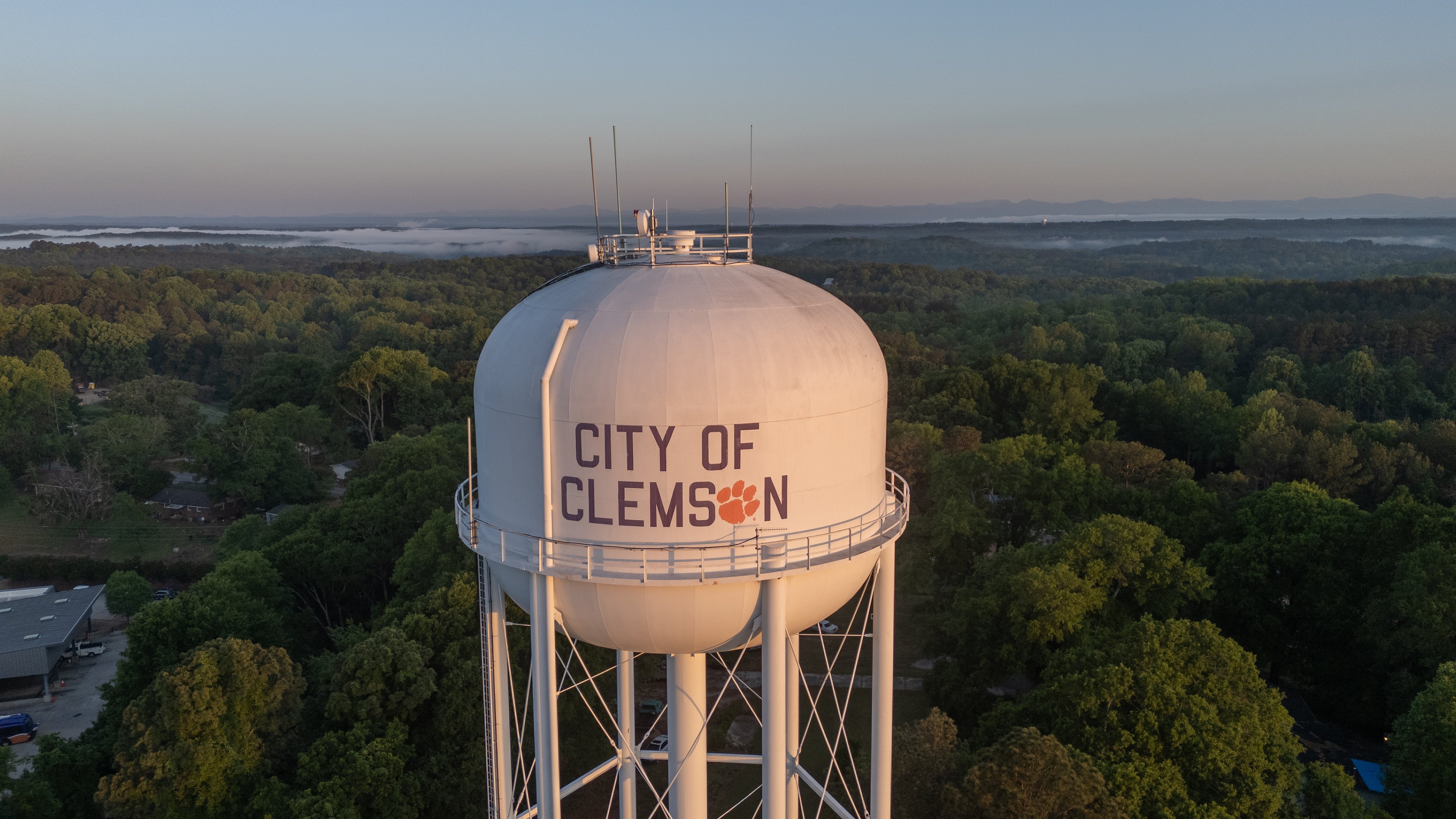
How Clemson, SC, Replaced a Struggling AMI System and Gained Continuous Leak Detection in Four Months
After changing course one-third of the way through an AMI deployment, the City of Clemson partnered with Kamstrup to modernize its metering infrastructure, improve customer service, and identify underground water leaks before they surfaced.