



What 15 Years of AMI
Experience Has Taught Utilities
Drawing on conversations with utility leaders across North America, this article explores how 15 years of AMI experience have reshaped utility expectations—and why confidence has become the industry's most valuable measurement.
Fifteen years after the first large-scale AMI deployments, the water industry has accumulated something more valuable than marketing promises: experience. Utilities now know what AMI can deliver—and they know where systems have fallen short. After 15 years of AMI experience, utilities are becoming much clearer about what they actually need—and much less willing to accept promises without proof.
As some of Kamstrup's earliest U.S. AMI deployments approach a decade in service, we spent the past year revisiting customers, evaluating long-term system performance, and asking a simple question: after living with AMI, what do utilities now expect from it?
The answer surprised us. Utilities weren't asking for more features. They were asking for more confidence.
The first generation of AMI taught utilities what the technology could make possible. It also taught them what happens when the foundation does not hold. As utilities evaluate their next systems, their expectations have become more practical, more demanding, and more informed by experience. They still want more data, greater efficiency, improved customer service, and better visibility into water loss. But increasingly, they are asking a more fundamental question: Can we trust this system to perform—day after day, year after year—well enough to build our operations around it?
Utilities that have lived with AMI now have five primary expectations:
1. Utilities expect the physical system to last.
Utilities have learned to question the technology and power management behind smart meters. Too many utilities have invested in systems that failed prematurely. According to Blake Michal, Head of Solution Engineering at Kamstrup, “a lot of preconceived notions that utilities bring to the table come from past experiences; maybe they were early adopters of a technology and the battery failed well before its expected life, or they dealt with assets that got stranded in the field.”
Today's utilities are building operations around these systems. They need confidence that the assets in the field will still be performing years from now. Which is why their expectations have evolved beyond simply for ultrasonic metering or a 20-year battery. Utilities have learned the difference between specifications and proof.
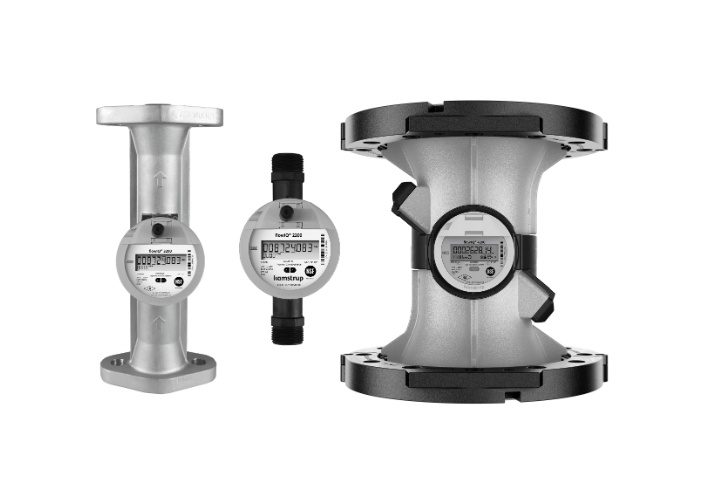
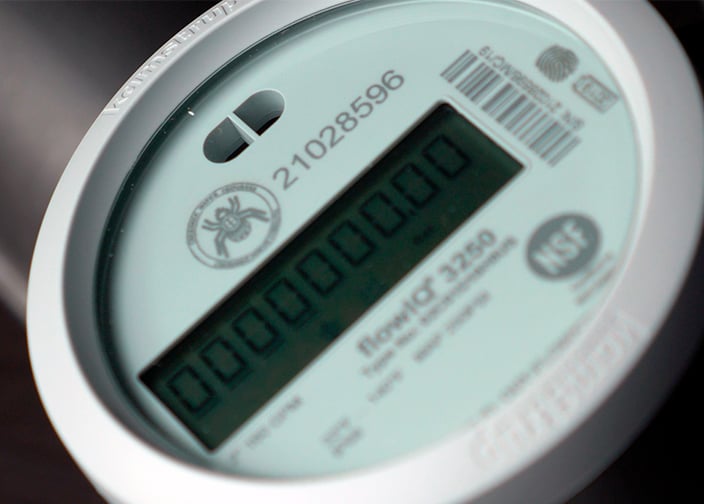
Customers point to Kamstrup's long history in ultrasonic measurement, waterproof meter construction, rigorous manufacturing controls, 100% flow testing, and a 0.25% North American return rate—not as marketing claims, but as evidence supporting long-term reliability.
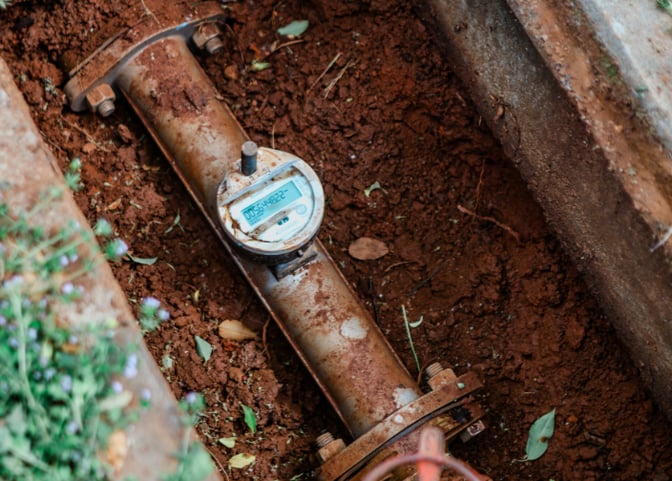
Here’s how Ron Baker, from Medford Water Utility in Medford Massachusetts talked about his experience:
Still, when utilities first encounter Kamstrup, they are naturally skeptical. So much of what they’ve heard or handled has failed. So, it’s no wonder they need proof, and Kamstrup supports that. “We want utilities to do more than take our word for it.” Says Blake Michal.
To validate those expectations, Kamstrup has been pulling meters from the field that have been in service for more than 10 years. As we are halfway through the lifecycle of some of our 20-year systems, we are running them through rigorous battery-life testing to confirm those meters are going to go the distance.
According to Michal, “When the physical infrastructure performs reliably, utilities can stop planning around failure and start planning around results.”
2. Utilities expect measurements they can trust - not simply more data.
With the influx of data into the water industry, utilities have quickly become sophisticated as to what data they need and how to use it. More data is not automatically more valuable. Utilities expect enough resolution to see change, enough accuracy to trust what they see, and enough context to know what to do next.
According to Tom Caughey, Field Operations Supervisor at Lower Bartlett Water Precinct, “The real magic happened for us with the 100% change out, 100% of hourly reads, that data set really is, it's the smartest thing going. And the ALD, it's indispensable, you know.” Lower Bartlett Water Precinct went from two or three data points per year to 100% hourly reads across the system. Their goal was a “high-quality dataset, at a frequency that could provide actionable intelligence for system operators.”
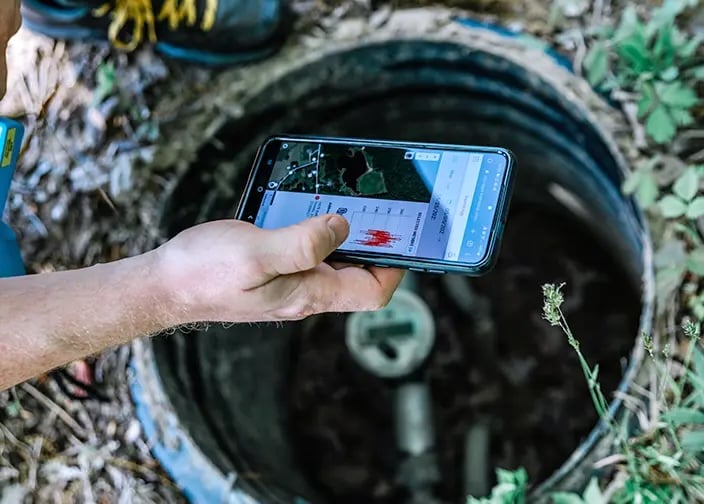
Utilities repeatedly described the value of accurate, trustworthy measurements, not simply more information. They appreciate the hourly reads, low-flow accuracy, dynamic measuring range, and acoustic leak detection data that they receive from their Kamstrup meters.
It’s surprising to many utilities that encounter Kamstrup. As Tom Caughey said in an ACE26 Educational Session “The low-flow accuracy was a surprise; we realized just how much data we were missing.”
Likewise, Medford Water Department expected their first AMI system to offer customer leak alarms, when in fact the data didn’t support it.
"We promised customers, in 2005, that we were going to tell them where the leaks were, but we didn't have the capabilities because we were only reading twice a day. Now, with hourly readings, the system automatically emails or texts customers if they have a constant flow, like a leaky toilet. Customers are reaching out to thank us for saving them money."
For many utilities, the initial experience with AMI brought the realization that dashboards and analytics are no measure of AMI value, if the system lacks reliable, high-quality data to inform the operational utility they need.
3. Utilities expect the network to work where their meters actually are.
Remote connectivity is one of the greatest promises and achievements of an AMI transition. However, the technical realities that many teams experienced post-deployment added new operational burdens including incomplete coverage, poor read rates, external radio wires which became a frequent point of failure, and third-party network ownership costs.
There is no one-size fits all network. Utilities need reliable, flexible, and secure components that can be customized for their needs and future plans. A network design has to reflect the utility’s actual geography, infrastructure, installation conditions, and risk tolerance—not an idealized coverage map.
Utilities often approach Kamstrup skeptical that AMI will perform in their particular environment. Whether this is because they cover large, rural areas like Iredell, NC; dense, tree-covered, suburban, basement-installation regions like Riverside, IL; or rugged, mountainous areas like Cherokee, NC; all have happily discovered that detailed planning and reliable hardware with built-in radios deliver a rugged and scalable AMI network.
There are no shortcuts to network planning, but with accurate propagation studies and proper collector placement, utilities are often shocked by the success. Here’s how Tom Caughey described the experience of Lower Bartlett Water Precinct, which is located in the rugged, remote mountains of New Hampshire. They have known gaps in cell coverage and an existing RF-based SCADA system, so they knew they needed an RF network and wanted 100% coverage. They expected a challenge and a hassle, but got neither. Here’s how Tom Caughey described their surprise.
"They did the propagation studies, they had it. And then, you know, our SCADA antennas are 8-, 10-, 12-feet long, and we get these RF radio antennas on the [Kamstrup] meter, and they're [3 inches] long. So, I was very skeptical that it was going to perform. But it has.
We've got some, mountainous terrain, our service elevations go from 540 feet to 1,400 feet… and everything's performed well with that RF network. It was promised that they could get us 100% hourly reads. We didn't think anybody really could, and we did get it."
In Woonsocket, RI, Superintendent Marc Viggiani describes from the perspective of a utility that contracts out for their installation.
"The installation is very quick on these meters. I’ve talked to the installers. They love them…you know, not running wires through cluttered basements. And, it just saves a lot of time on an installation on that scale."
For many utilities, network reliability means more than signal strength. Utilities expect a system that can be installed, commissioned, and operated within their physical reality.
4. Utilities expect software to make the data easier to use -not give them another system to manage.
As utilities have experienced AMI they have come to recognize the value of data over dashboards. Much of the software that utilities adopted with AMI required its own transition. Utilities don’t need complex software that proves how much data the system can generate. They need software that reduces complexity, with data running seamlessly behind it.
The team at Lower Bartlett Water Precinct is small. They wear multiple hats while managing a system that is constantly changing. When it comes to software, they value autonomy, simplicity, and actionable insights. Here's Tom Caughey again.
The software sifts through the ‘big pile’ of data to give us actionable intelligence. And the ALD, it's indispensable, you know…With Kamstrup, they give us an API key, so the data is ours. The features, ease of use, and quality of the different meter manufacturer software was less of a thing. We can do as much or as little with our data as we want.
Today’s AMI installations serve multiple departments. Operations, customer service, billing, engineering, finance, and IT increasingly rely on the same measurements to make different decisions. Utilities therefore expect software to create a shared operational understanding of the system while presenting meaningful information appropriate to each role.
5. Utilities expect a partner for the lifecycle - not a vendor for the deployment.
Infrastructure partnerships last decades. Utilities therefore evaluate vendors differently than they evaluate products. When a utility makes a 15- or 20-year infrastructure decision, they need to know who will be answering the phone after the installation is complete.
Blake Michal encourages utilities to do more than simply take a vendor's word for it. The best way to do that is to talk to other utilities and find out what kind of support they received and over how long.
To that end, here’s how Chad Lindberg, Customer Service Supervisor at Beaverton Water in Beaverton Oregon described their experience working with their local distributor, HD Fowler and Kamstrup through their project.
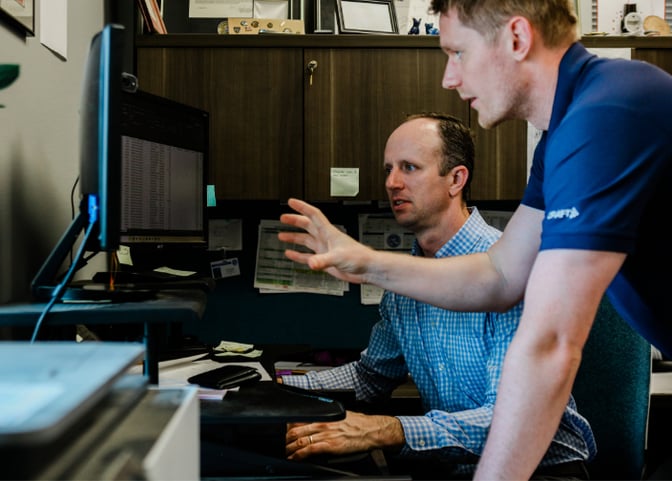
There were some struggles with data integration and pulling the information into Springbrook. We let HD Fowler know…and they passed that on to Kamstrup. When we heard that the team over in Denmark, high-level team, wanted to speak with us and meet face to face, it meant a lot… to have that interaction and… to be able to get the information directly to those who are in charge and making those calls on the Kamstrup side.”
Experience changes expectations.
Fifteen years after AMI began transforming the U.S. water industry, utilities have become more sophisticated buyers. They still expect better visibility, greater efficiency, and improved customer service. But experience has taught them that none of those outcomes are possible without confidence in the foundation.
The industry's first generation of AMI answered the question, Can this technology work? The next generation is asking a different question: Can we build the future of our utility around it?
The conversations we had this year reinforced that trust isn't created by a specification sheet. It is earned over years of reliable measurement, dependable communications, usable data, and responsive partnership.
Because ultimately, the real measure of an AMI system isn't how impressive it looks on the day it goes live. It's whether, years later, the utility still trusts the measurements, relies on the network, uses the data, and has moved beyond managing technology to managing the water system itself.
About the Author
Penny Cannon is Senior Content Specialist for Kamstrup North America. She collaborates with utilities, colleagues, and industry professionals to capture customer experiences and develop thought leadership to help the industry learn from real-world practice.